
Belize Rolex Recovery: Accomplishing the Impossible in the Caribbean
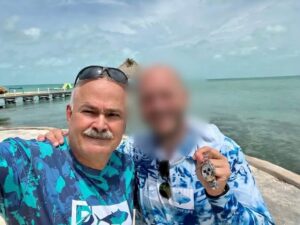
Over the years, Houston Metal Detecting Services has recovered thousands of lost items, but every now and then a call comes in that immediately stands out from all the rest.
This story began with a phone call from David, a California resident who had recently returned from a vacation in Belize. David explained that while vacationing near San Pedro on Ambergris Caye, he had lost one of his most prized personal possessions—a Rolex watch.
David told me that he and a friend had rented jet skis from Secret Beach and spent the day exploring the crystal-clear waters of the Caribbean. During their adventure, they ventured approximately a mile offshore to a small island visible from the beach.
While making an aggressive turn near the island, David experienced a violent wipeout and was thrown from the jet ski into the water. Although the crash was significant, he quickly remounted the ski and continued enjoying the day.
A short time later, David's friend pulled alongside him and asked how much rental time remained on their jet skis. David instinctively looked at his wrist to check the time.
His watch was gone.
The realization hit immediately.
David knew the odds were stacked heavily against him. He was in a foreign country, in open water, near a remote island in the Caribbean Sea. They still had to return the jet skis and travel back across open water to the rental location. Any thoughts of conducting a search on their own seemed hopeless.
Despite the circumstances, David had a strong feeling that the Rolex had come off during the wipeout near the island. He remembered the general location and, more importantly, a nearby pier that could potentially serve as a reference point.
Several days after returning home to California, David began researching professional lost-item recovery specialists and eventually found Houston Metal Detecting Services.
When he called, he got straight to the point.
Would I consider traveling to Belize to help recover his watch?
After gathering additional details and reviewing the circumstances, I explained that this was certainly one of the most unusual requests I had ever received. Flying out of the country to search for a single watch near an unknown island in the Caribbean was not exactly a typical recovery operation.
David was determined.
He offered to cover all travel expenses and accommodations required for the trip. We spoke on a Friday, and before long I found myself boarding a small single-engine aircraft from Belize City bound for San Pedro.
Upon arrival, David greeted me at the airport in what serves as the primary mode of transportation on the island—an off-road golf cart.
From there we headed to Mahogany Bay Resort, our base of operations. I have traveled to many places over the years, and while much of San Pedro wasn't necessarily my style, Mahogany Bay Resort was outstanding—modern, clean, comfortable, and an excellent place to prepare for the mission ahead.
After unloading our gear, we made the forty-five-minute golf cart ride to Secret Beach to get eyes on the search area before launching the following day.
The water was absolutely stunning.
The Caribbean displayed shades of blue that simply do not exist along the Texas coast, even on our best days. David pointed toward a small island visible on the horizon.
"That's the place," he said.
One of the most important steps in any recovery operation is seeing the location firsthand whenever possible. Understanding landmarks, distances, water conditions, and reference points often makes the difference between success and failure.
Our original plan was simple.
We would rent two jet skis the following morning, load our equipment, and make the trip to the island.
That evening, however, Belize had other plans.
Strong winds and rain moved into the area, creating rougher conditions than anticipated. After discussing our options, we abandoned the jet ski plan and rented a small boat instead.
It proved to be the right decision.
The ride across open water was rough enough in a 21-foot boat. Several waves came over the bow before we shifted our equipment farther aft. Even then, we spent much of the trip taking ocean spray and holding on.
Looking back, I am not convinced we could have safely transported all of our recovery gear on jet skis under those conditions.
Upon reaching the island, we quickly realized the weather had created another challenge.
The pier David had identified as our primary reference point was taking waves head-on. The boat rocked violently while we attempted to anchor. Timing our movements getting in and out of the boat became an exercise in patience and coordination.
We had brought a floating grid line system with anchors to establish a formal search area. Unfortunately, the wave action was too strong to keep the system in place.
Instead, we adapted.
Using the pier pilings as reference markers, we established an informal search grid and began working the area.
Our plan allowed up to three full days for the recovery effort.
Before beginning, I spent several hours teaching David how to use a metal detector and recovery scoop in shallow saltwater conditions. We configured the NOKTA Triple Score detectors in their standard saltwater settings and assigned David a search sector of his own.
The bottom conditions turned out to be better than expected.
Even more encouraging was the complete lack of trash targets.
No bottle caps.
No fishing weights.
No aluminum cans.
Nothing.
As any experienced detectorist knows, that is often a very good sign.
It meant that if either one of us received a target signal, there was a strong possibility it could be the Rolex.
After approximately forty minutes of searching, David walked back toward the boat to retrieve a dive mask and conduct a visual inspection around a nearby reef structure.
Moments later, my detector sounded off.
A solid target.
After forty minutes of complete silence, I honestly didn't care what the numbers on the screen said.
I knew there was a very good chance this was what we had traveled all the way to Belize to find.
I carefully positioned my XTREME Scoop—a product from my own company that I proudly use on recoveries around the world. For this trip I had brought two setups equipped with three-piece travel handles and Ti Sand Shredder Pro V3 baskets, planning to train David so we could cover more ground efficiently.
I eased the scoop into the sand and lifted it toward the surface.
And there it was.
David's Rolex watch sat perfectly in the bottom of the scoop.
For a brief moment, I simply stood there.
Surrounded by miles of open Caribbean water, staring at a watch that had been lost days earlier near a tiny island in Belize.
I remember looking around and asking myself:
"Did that really just happen?"
As David walked back toward me from the boat, I decided to have a little fun.
I told him we needed to discuss the search.
I explained that the surf conditions were becoming a concern and that the uncertainty surrounding the exact loss location might require us to reevaluate our plan.
I suggested we head back to the boat and discuss our options.
Then I asked him a simple question.
"Do you know how long we've been searching?"
David admitted he wasn't sure.
I handed him the Rolex and said,
"Maybe this will help."
The expression on his face was priceless.
Shock.
Relief.
Disbelief.
Gratitude.
All at the same time.
Mission accomplished.
We packed our gear, navigated back across the rough water, returned the boat, and spent the evening planning a well-deserved celebration dinner.
In over a decade of professional recoveries, this ranks among my favorite calls of all time.
Not only did we accomplish what many would have considered impossible, but the adventure itself was unforgettable. From flying into Belize and crossing rough Caribbean waters to recovering a Rolex watch near a remote island, the experience reminded me why I love this profession.
Sometimes the recovery is only part of the story.
The friendships, adventures, and memories created along the way are often just as valuable.
And in this case, I didn't just recover a Rolex.
I gained a lifelong friend.